
Local and Internationally Accredited EMC product testing and
approval services
Emission Testing
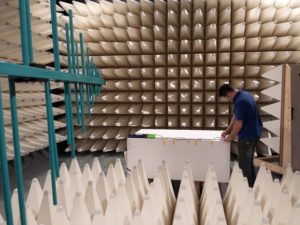
Austest provides EMC emissions test capabilities encompassing the majority of standards required for compliance with the ACMA’s EMC framework for RCM and the regimes of other countries including CE Marking requirements for Europe, FCC for the USA and ICES-003 for Canada. Our scope of testing includes the following standards:
| Product Family | AS/NZS | EN (CE) |
| ISM equipment | CISPR11 | 55011 |
| Spark ignition engines | CISPR12 | 55012 |
| Radio/TV/Audio/Video Equipment | CISPR13 | 55013 |
| Electrical motor-operated and thermal appliances | CISPR14.1 | 55014-1 |
| Lighting Equipment | CISPR15 | 55015 |
| Information Technology | CISPR32 | 55032 |
| Generic | AS/NZS 61000.6.3 & AS/NZS 61000.6.4 | EN 61000-6-3 & EN 61000-6-4 |
| Arc welding equipment | AS/NZS3652 | |
| Equipment for Measurement, Control and Laboratory | EN 61326 |
Immunity Testing
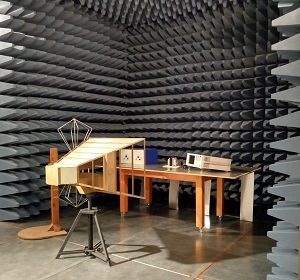
Apart from CE marking immunity test requirements detailed below, Austest performs testing to the following product family standards;
- EN60601-1-2 3rd and 4th editions, including radiated immunity and ESD requirements for medical devices
- EN50130-4, Immunity Requirements for Alarm Systems
- EN55014-2 Immunity requirement for Household Appliances, Electric Tools
- EN55024, Immunity requirements for Information Technology Equip
- EN55103-1, EMC Requirements, Emissions and Immunity for Audio, Video and Entertainment Lighting for Professional Use
- EN61326, EMC Emissions and Immunity Requirements, Electrical Equipment for Measurement, Control and Laboratory Use
- EN61547, EMC Immunity for Lighting Equipment
EMC Directive
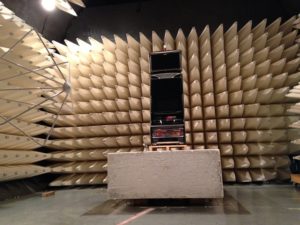
All products placed into service in the European Union (EU) must bear the CE mark. This indicates compliance with all technical directives applicable to that product or system. For most electrical or electronic apparatus this includes the EMC Directive.
The simplest way to demonstrate compliance with the protection requirements of the EMC Directive is by making a declaration of conformity to the appropriate harmonised standards.
A harmonised standard is a standard that has been formally accepted by the EU, and referenced in the EC Official Journal. These standards are generally drawn from IEC, CISPR or ETSI standards and are prefixed “EN”.
Austest can provide test services to demonstrate compliance with most harmonised EMC standards for most product types. The harmonised standards usually require emissions and immunity tests to be performed on the product.
The most common emission tests required are conducted mains and radiated disturbances. Both tests require specialised equipment and procedures.
A recent additional requirement comes in the form of EN61000-3-2 and EN61000-3-3 which effectively mandate harmonics and flicker limits for all mains powered devices.
Austest performs testing to a range of harmonised standards that may be used to demonstrate compliance with the requirements of the EMC Directive.
The most commonly required immunity tests invoked by the harmonised standards are:
- EN61000-4-2 Electrostatic Discharge
- EN61000-4-3 Radiated field
- EN61000-4-4 Electrical fast transients & bursts
- EN61000-4-5 Surges
- EN61000-4-6 Conducted RF immunity
- EN61000-4-8 Magnetic Field Immunity
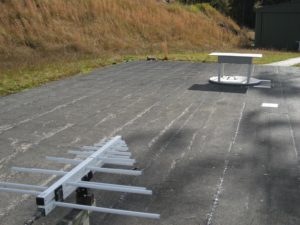
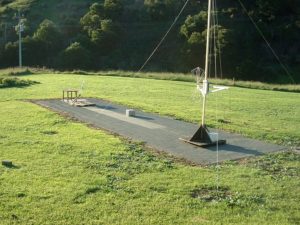
Austest’s FCC Listed 10m OATS, Yarramalong NSW - EN61000-4-9 Pulse Magnetic Field Immunity
- EN61000-4-11 AC supply dips and interruptions
- EN61000-4-13 Harmonics and inter-harmonics including mains signalling at a.c.
power port, low frequency immunity tests
Austest provides testing to these and other immunity standards.
U.S.A FCC (Federal Communications Commission)
FCC Part 15: Covers the rules for the operation of unintentional, intentional or incidental radiators. Any electrical or electronic devices incorporating a digital circuitry operating with an oscillator or clock speed greater than 9kHz requires approval to this rule. Contains two Classes, A and B. Class A digital device: A digital device that is marketed for use in a commercial, industrial or business environment. Class B digital device: A digital device that is marketed for us in a residential environment notwithstanding use in commercial, business and industrial environments.
FCC Part 18: Applies to industrial, scientific, medical and domestic products that generate RF energy to perform work. Examples are devices such as a Microwave Oven or an Ultrasonic Cleaner, etc.
This document lays down technical limits and operational details for various devices and generally requires measurement methods in accordance with ANSIC63.4. However, for some types of digital devices a declaration of conformity to CISPR22 is acceptable.
Austest’s EMC facilities are listed with the FCC for performing tests in accordance with part 15 and 18.
Note the FCC does not mandate immunity testing.
Canada ISED (Innovation, Science and Economic Development Canada)
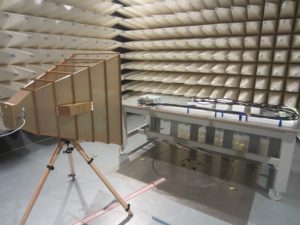
ISED wireless device testing laboratory. for RSS-GEN, RSS-210 and RSS-247 (no DFS).
MIL-STD 461 and Avionics to RTCA DO160
Austest Laboratories provides MIL-STD 461G (+ previous versions) and the aircraft EMC standard RTCA DO160 testing, encompassing emissions and susceptibility. Our capabilities cover 10KHz up to 18GHz and with a field strength of up to 200V per metre over the entire range.
Austest is the only Australian lab providing accredited Military and Avionic testing covering EMC and Environmental standards including MIL-STD-810, MIL-STD-167, MIL-STD-202 and DEF-STAN 00-35.
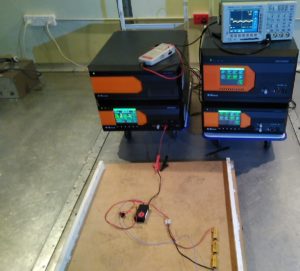
Automotive EMC
These standards apply to vehicle mounted products and accessories under CE requirements, with our capabilities including the following;
- ISO 11452-2:2004
- ISO 11452-3:2016
- ISO 11452-4:2011
- ISO 11452-8:2015
- ISO 16750-2:2012
- ISO 7637-2:2011
- ISO 10605:2008